Blog Archives
Fitness & Footwear
 Like many women, I love shoes. I love them even more when I find a great pair at one of the discount shoe paradises that have popped up all over the country. There is one type of shoe, however, that I will gladly pay full price for if I have to, and that would be my sneakers. Why? Because wearing the proper footwear while you workout is one of the easiest ways to protect yourself from exercise-related injuries.
Here’s a little trivia for you: there are 26 bones, 33 joints, 107 ligaments and 19 muscles and tendons in each foot. (No, I didn’t have those numbers memorized, I looked them up in AFAA’s Fitness: Theory & Practice, Fifth Edition.) That means there are 370 places vulnerable to injury in your feet alone. Now consider that improper foot support can lead to compensations made by your knees and hips, and you are putting your body at risk for a world of hurt.
So, what’s the best footwear? It depends on your foot type. If you have a high arch, you need sneakers with good shock absorption. If your feet are flat and/or “roll” inward or outward, you need a sneaker with stability. An “average” foot needs a shoe with both cushioning and stability.
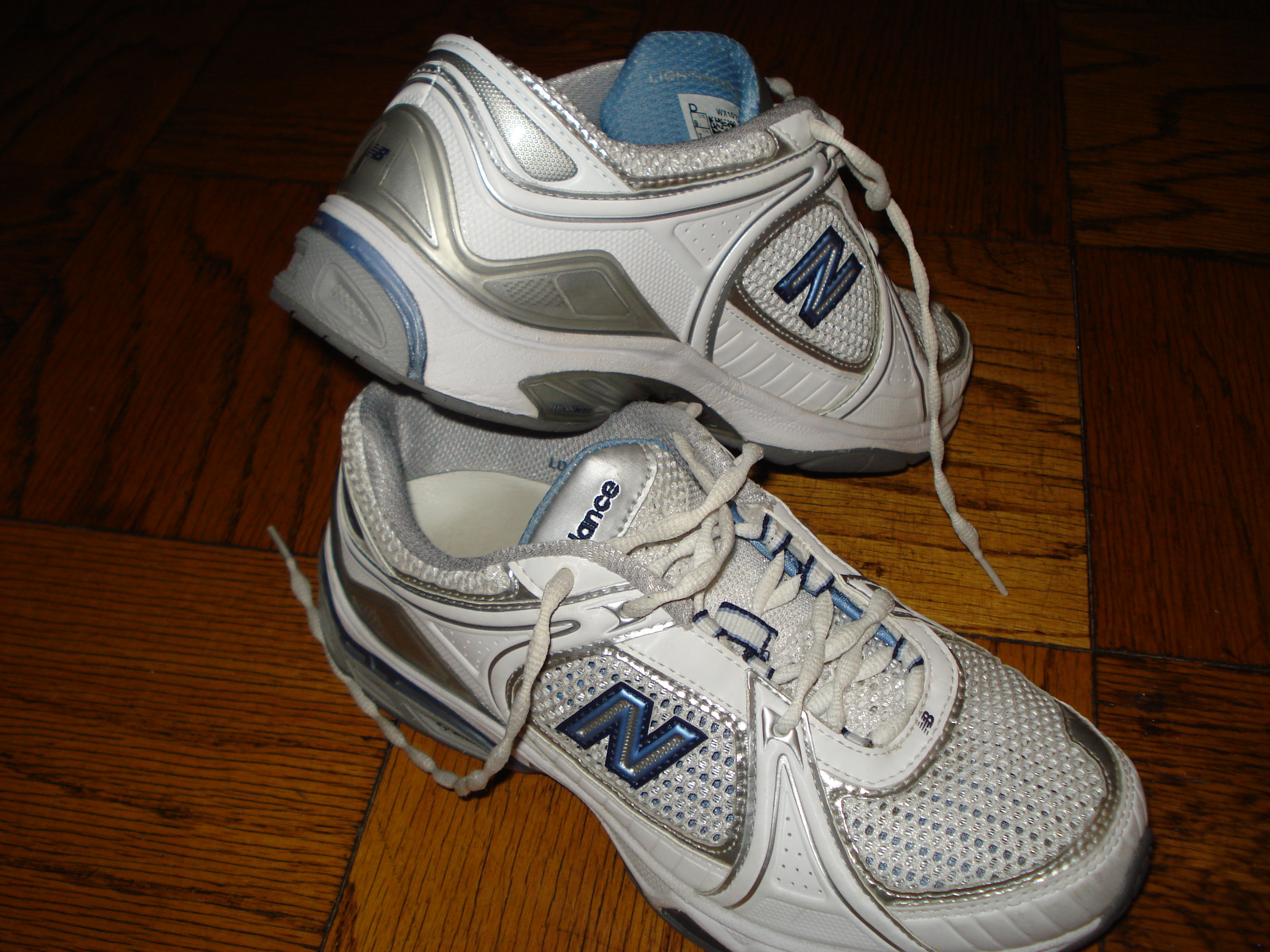 I don’t know your foot type, but I can tell you what works for me. Since my fitness routine includes walking, elliptical training, riding the stationery recumbent bike, rowing, and weight training, cross trainers keep me well-grounded and stable. I started wearing New Balance cross trainers five years ago (I currently wear the 1011s), and I get a new pair every six months. I can honestly say if I wait longer than six months, I start to feel pain in my knees while I’m on the elliptical or while doing squats and lunges. My current pair are two months old, and at the moment, I wear them with orthotics as I continue to recover from a stress fracture in my left foot. (A subject for a future blog.)
While I am not a runner, most of my friends who are will only pound the pavement in running sneakers. I also have friends who have sneakers specifically for when they’re on the tennis court. Many basketball players like high tops for the extra ankle stability. If there is one sport you play often, it’s a good idea to get a pair of sneakers specifically for that activity, and also have a more “universal” pair, like cross trainers, for days when you mix up your routine.
I look at it this way: I have far too many purses in my closet and most guys have more ties than they will ever need. So why wouldn’t you spend the money to have at least one good pair of sneakers to protect you from injuries while you’re working so hard to stay healthy?
In the end, wearing the proper footwear is one of the easiest ways to have fun, be fit and feel fabulous!
Beat the Heat

Photo by Laura DeAngelis
Toward the end of this wonderful weekend, I headed to our rooftop deck to enjoy my weekly “guilty pleasure” of reading the latest People magazine cover to cover. Despite my SPF 30 sunscreen, sun hat, sunglasses and big water bottle, I only lasted an hour. The heat was just too much, and I was just lying around reading. Which made me realize this is the perfect time for a refresher course on heat-related emergencies.
With a little help from the textbooks I used to study for my AFAA and NASM exams (Fitness: Theory & Practice, Fifth Edition and NASM Essentials of Personal Fitness Training, Third Edition), here’s what you need to know if you or someone you’re working out with experiences any of the following:
Heat cramps: These are painful muscle spasms, usually in the legs or abdominal region, that could be a signal that a more serious emergency is imminent.
What to do: If you experience heat cramps, stop exercising, find some shade or move indoors where it’s cool and drink cool water.
Heat exhaustion: This is a step up in severity from heat cramps, and can occur when you’ve been exercising strenuously for a long period of time in extreme heat or humidity. Signs and symptoms:
- Moist, pale, or cool skin
- Headache or dizziness
- Muscle cramps
- Heavy perspiration
- Nausea
- Weak pulse
What to do: Get out of the heat, loosen all tight clothing and cool the body with wet towels, but not to the point of shivering and drink cool water.
Heat stroke: This is the most severe heat emergency and usually happens when signs of heat exhaustion go unchecked. In this situation, dangerously high internal body temperatures will cause your body’s vital systems to fail. Signs and symptoms:
- Altered level of consciousness
- Rapid, shallow breathing
- Little or no perspiration
- Weakness
- Rapid pulse
What to do: As with heat exhaustion, get out of the heat, loosen tight clothing and cool the body with wet towels. If you can find them, you can also put ice packs under the armpits and groin area.
A few preventive steps to remember:
- Try to exercise outdoors before 9 am and after 6 pm.
- Stay hydrated! Basic guidelines call for you to drink 16 oz of water two hours before exercise, but you can drink an additional eight to 16 oz if you’re exercising in warmer weather.
- If you are being treated for cardiovascular or circulatory problems and are any medications, always check with your doctor before adding any outdoor activity to your routine.
I leave you with these two final and important tips:
- Do not hesitate to call 911 in an emergency.
- Listen to your body. It knows when something’s wrong.
While it’s the perfect time to get outside and get moving, use some extra care so you can have fun, be fit and feel fabulous!


 lauralovesfitness