Blog Archives
Don’t Forget to Rest!
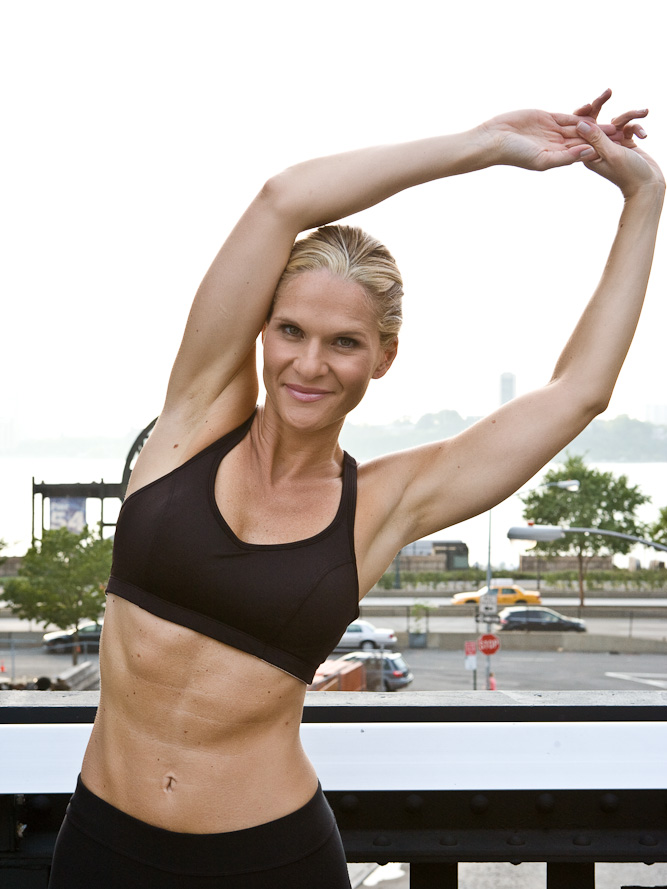
Don't Forget to Rest! Photo by Leslie Hassler
It seems like yesterday I was looking forward to wrapping up 2011 with some down time and here we are cranking away at the near mid-month mark of January 2012! For those of you who’ve kicked your fitness resolutions in the butt by pounding the pavement or hitting the gym every single day since the New Year started, let me first be the first to offer a big, congratulatory pat on the back. Now I want you to take a day off!
You might be saying, “but Laura, you’re on Twitter, you know it’s #Workout Wednesday!” I didn’t say you have to make today your off-day, but you do need a minimum of one rest day during the week.
A rest day allows the body to recover from the stress of exercise and presents an opportunity for muscular repair and recovery of the central nervous system. Pushing your body day after day at the same group exercise class or on the same weight training circuit or along the same 5-mile route is one of the quickest paths to burning out on your routine. This can be especially true for anyone who’s new to a workout routine or just coming back after a lengthy hiatus.
The possibility of a mental meltdown aside, continuously pushing the body to the limit puts you at risk for overtraining. The following are some of the symptoms to look out for to determine if you’re overdoing it:
- Fatigue
- Increased resting heart rate
- Increased resting blood pressure
- Slower recovery after exercise
- Overuse or stress-related injuries (e.g. stress fractures, tennis elbow and runner’s knee)
- Insomnia
- Irritability or moodiness
- Disinterest in sex
- Amenorrhea (when a woman stops getting her monthly period)
- Increased numbers of colds / sore throats (shows decreased immunity)
- Decreased appetite
From what I learned through my NASM and AFAA studies, a good training frequency for the fitness newbie or anyone returning after a hiatus is three resistance workouts each week. This allows you to work your muscle groups with 48 hours of recovery in between. Cardio can be done on the in-between days or even on the same day. Even more seasoned athletes should give a muscle group a 48-hour rest period before pushing it to the limit again. Another good rule of thumb is to mix up your routine with cross training. Although I’m excited to take as many Zumba® classes as possible to continue my teaching prep, I’ll be sure to spread the classes out throughout the week. The same should be applied to your favorite cardio kickbox class or your favorite at-home DVD workout.
For those of you who can’t fathom even one day without any activity, turn your run into a long, leisurely walk or substitute your favorite cardio class with an extra-long session of stretching. In fact, the good news about flexibility training is that it can be done every single day of the week!
The bottom line is to remember taking a rest day doesn’t mean you’re being lazy. Rest is an important component of any fitness routine because it gives your body the energy to have fun, be fit and feel fabulous!
Stabilization Before Strength
 My friend Jared Morrison recently signed up for a membership at New York Sports Club. This being his first gym membership ever, we decided to turn it into a win-win situation for the both of us. Not only is Jared on his way to improving his overall health by getting on a regular workout schedule, but I am putting my NASM personal training studies into practice by helping Jared reach his goals. After meeting up with Jared for an assessment and kicking off a program, I was reminded of just how important the first phase of training is for anyone new to the gym or coming back after a hiatus.
The National Academy of Sports Medicine’s system for integrated training is called the OPT model, which stands for Optimum Performance Training. It is divided into stages and designed to help someone progress toward his or her individual goals in a safe and effective manner. The model is divided into three “building blocks:”
- Stabilization
- Strength
- Power
The bottom line is you should not focus on strength and power before you’ve tackled stabilization. Training in the stabilization phase allows you to increase muscular endurance and establish optimal communication between the nervous system and muscular system. Multiple studies have shown inefficient stabilization can cause muscles to produce force incorrectly and increase stress on the joints. This is a surefire way to put yourself at risk for injury.
Basically, the key exercises in this training phase are performed in a proprioceptively enriched environment, which is a “fancy” way of saying controlled, but unstable. These exercises challenge the body’s balance and stabilization systems. Many times, they involve taking a “traditional” exercise off a flat surface and moving you to an unstable one, like a stability ball; or standing on one leg instead of two. These exercises have an added bonus: since the body needs to work harder to stay stable, you can end up burning a lot of calories.
Here are some classic examples of stabilization exercises for resistance training. Aim to perform two sets of 12-20 reps of each:
- Total Body: Ball Squat, Curl to Press
- Chest: Ball Dumbbell Chest Press
- Back: Ball Dumbbell Row
- Shoulders: Seated Stability Ball Military Press
- Legs: Step-Up to Balance
In addition to his resistance training, Jared’s cardio routine will be working on reaching his goal of maintaining a zone one heart rate for a minimum of 30 minutes two to three times a week. (How to calculate your zone one heart rate.) He also will work on his core. Finally, as for flexibility training: he has the green light to stretch every single day – and multiple times a day if he can!
I am looking forward to monitoring and sharing Jared’s progress. In the meantime, I hope you’ve learned about some key stabilization exercises that can help your body perform at its best so you can have fun, be fit and feel fabulous!
Cardio for Beginners
 Whether you love it or hate it, cardiorespiratory exercise is crucial when it comes to reaching your goals of losing weight, reducing body fat or maintaining a healthy lifestyle. Research shows there are many benefits to cardio activity including its ability to decrease:
- Daily fatigue
- Anxiety and stress
- Coronary artery disease
- Hypertension
- Non-insulin dependent diabetes and
- Obesity
At the same time, cardio helps boost your:
- Sense of well-being
- Immune system
- Blood lipid profile and
- Overall physical performance at work and at play
While there are several levels to cardio training, for the purpose of this post, I’m going to focus on some guidelines for beginners and anyone who may be getting back into a fitness routine after a hiatus. (As usual, I base these guidelines using the essential information I studied through the National Academy of Sports Medicine.) Your cardio activity should focus on maintaining a zone one heart rate which is approximately 65% to 75% of your maximum heart rate. Here’s what that means for you:
- To calculate your maximum heart rate, subtract your age from the number 220.
- Multiply your max heart rate by .65.
- Multiply your max heart rate by .75.
To use myself as an example:
- 220-37 = 183
- 183 X 0.65 = 119
- 183 X 0.75 = 137
- Laura’s Zone One Heart Rate = 119 – 137
If you’re working within the parameters of zone one for cardio, it’s likely you are also in stage one of your overall exercise program. (NASM refers to this as the stabilization level.) If you’ve never worked out before, you may want to try to reach your zone one heart rate for a maximum five to ten minutes and then spend another 20 minutes simply walking at a good pace, climbing the stairs in your home or getting really dirty in the yard by cleaning up the garden. Your goal should be to eventually maintain your zone one heart rate for at least 30 minutes. This can take some time. A “newbie” may need two months or longer to meet this demand, but remember: there’s no finish line here. You’ve made a commitment to exercise and start taking better care of yourself, so while you don’t want to just dial it in, make the journey work for you.
A final note about measuring heart rate. You’ve made the decision to make fitness a part of your life, so along with a good pair of sneakers and breathable workout wear, invest in a heart rate monitor. Countless studies show it is the device that provides the most accurate heart rate readings. So, whether you’re using a treadmill in the gym or running or walking along the open road, you’ll be able to see if you’re really “in the zone.”
I hope this brief session of cardio 101 will help get your heart pumping safely and effectively so you can have fun, be fit and feel fabulous!
Fast Fitness
 Welcome to another fast and furious Friday installment of LauraLovesFitness! As I anxiously await the end of what has felt like a marathon week at the office, I thought it was the perfect time to offer an idea for those days when you just don’t feel like you have enough time for a good workout at the gym.
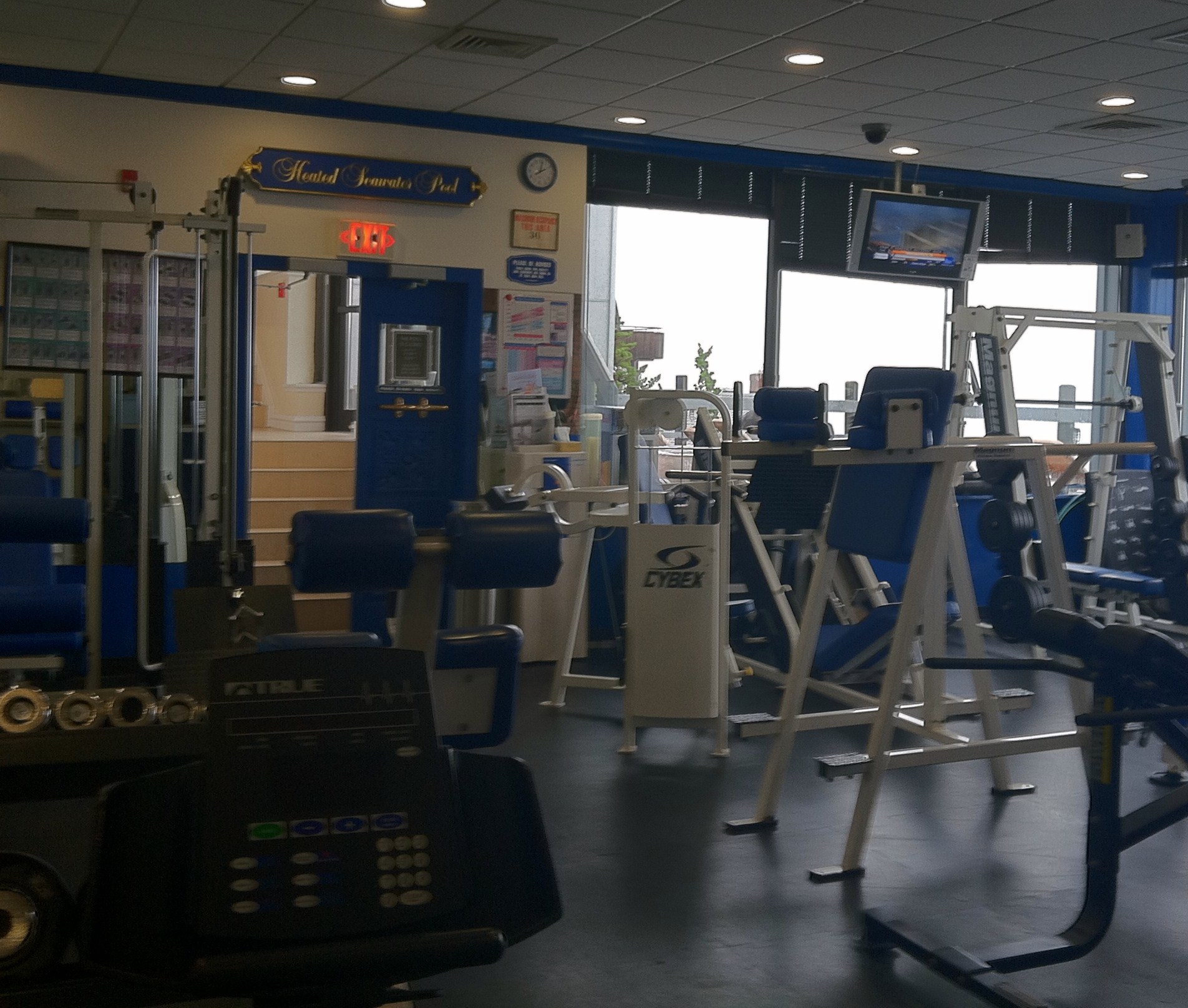
As a member of New York Sports Club, I have access to something I really love called the “XPress Line.” It is a separate area on the gym floor consisting of eight machines that work all your major muscle groups. (NYSC claims you can do it in 22 minutes, but I contest that depends on how many sets you do of each machine.) Even if you don’t belong to NYSC, these are eight machines that you can search out in your gym and create your own express workout wherever you go.
- Leg press – quadriceps, hamstrings and gluteals
- Leg extension – quadriceps
- Seated leg curl – hamstrings
- Lat pulldown – biceps brachii, latissimus dorsi and serratus anterior
- Overhead press – deltoids, triceps and upper trapezius
- Vertical chest press – pectoralis major, pectoralis minor, anterior deltoid, triceps
- Bicep curl – biceps brachii, brachialis, forearm flexors
- Tricep extension – triceps
For my “quick” workout, I will do 30 minutes of cardio on the elliptical either before or after making my way through the eight machines listed above. To keep my general fitness in check, I aim for three sets of 10-12 reps on each machine. (Beginners should aim for one set of 12-20 reps on each machine.) After the machines, I’ll find a spot on the floor to do crunches and planks to get my core burning. I wrap up the program with static stretches and using the foam roller for self-myofascial release. (A future blog topic.) So, in about an hour, I get the heart rate up, break a good sweat and feel really good about getting all my muscle groups moving.
If you are new to the gym, I can’t stress how important it is to asking a trainer or other gym staff member about the proper way to use the machines. If you’re the shy type, then bring a friend along who can show you a thing or two on the gym floor. You don’t want to risk getting injured and sitting on the sidelines. It’s much more fun to experiment with all the ways you can have fun, be fit and feel fabulous!
I Got Myself to the Gym. Now What?
 You took the plunge and signed up for a gym membership. You change into your workout wear, turn on the iPod…and find yourself completely overwhelmed surrounded by a sea of equipment. Don’t worry, you’re not alone. One of my best gal pals from Northwestern University, Molly, recently posed the following questions:
“My problem with getting/staying fit right now is not knowing exactly what to do with myself once I’m at the gym. Should I just focus on cardio? (I’d like to lose a few pounds.) If so, do I stick with one machine like the treadmill and work on building speed and endurance, or switch it up and try the elliptical sometimes? Should I start again with the weight machines, which I haven’t done in a while? (I’d also like to tone up and gain strength.) Take a class?”
Two important points to address right away:
1) They key to losing weight is burning more calories than you take in. That can be done through cardio and/or resistance training. Whether you’re an exercise novice or seasoned gym-goer, your body will benefit most from a combination of the two.
2) Find what you like to do at the gym, and you will stick with it. Then with some help from perseverance, self-discipline and motivation, you can get the results you’re looking for.
Reminding myself how good I feel after a workout fuels my perseverance and self-discipline. As for motivation, if you’re new to the gym, I strongly recommend meeting with a personal trainer at least once. Aside from helping you get familiarized with the gym, a personal trainer will also conduct fitness assessments to determine if you have any postural distortions that need correcting as part of your routine. In the simplest terms, you will learn what areas of your body need to be stretched and which need to be strengthened.
Many gyms welcome new members with a complimentary training session. If your gym doesn’t offer this service and a personal training session is not in your budget, then recruit a friend who does know his or her way around the gym to be your training partner.
Group exercise classes can also be a great source of motivation. With classes ranging from cardio kickboxing to Zumba, there is something out there for everyone. To avoid boredom at the gym, I’m a big fan of mixing up group exercise classes with your own program during the week.
Cardio is a topic that warrants its own blog post. For now, I recommend newcomers try the treadmill, elliptical and stationary bike for 10 minutes each. Determine which one you like best, then work on being able to run, stride or cycle for up to 30 minutes where you notice a moderate increase in your heart and respiratory rates. Doing this five to seven days each week with two days of resistance training is a good workout plan to strive for.
One final note: it takes six weeks before something becomes a habit. So, your first trip to the gym is the first big step in making exercise part of your routine to have fun, be fit and feel fabulous!
Make Time for Yourself
 There is a phenomenon in fitness called the cumulative injury cycle. Basically, if you continue to exercise without correcting any postural distortions that lead to muscle imbalances, the compensations your body makes to allow you to follow through with the exercise will eventually lead to an injury. I am also a firm believer our mental fitness can take a serious hit if we don’t take time to rest and regroup.
As I sit here looking at the ocean in Montauk, I realize what a different person I am today than just two days ago. I attribute this mind-altered state to two factors: I am on vacation and I am doing things for myself I simply do not do enough of at home. That includes:
- Letting the sound of the ocean drown out my anxieties about work
- Not rushing through my workouts
- Sitting in the steam room after my workouts
- Getting a massage
- Eating dessert
- Not worrying about having less-than-optimal cell or WiFi service
To expand on that last point, I haven’t been able to upload any pictures taken on my iPhone to my Facebook page and I have only been able to update my status once. I have been able to open my work and personal email accounts, but I haven’t been able to send a reply. Forget about Twitter or LinkedIn. I finally decided to stop trying to open my apps and simply said: “You are on vacation!” If someone really needs to get a hold of me, I can still retrieve voice messages from a few spots in the parking lot.
Whether you run the household, run a business or have a job where you answer to a boss, everyone works hard. No doubt the state of the economy has shattered whatever our definition of financial security was in the past. Many of us still struggle from the aftershock of losing a job or may be trying to keep a business afloat. This makes it all the more important to take some time to be good to ourselves when we can.
Realistically, a vacation or trip to the spa may not be attainable at the moment, but that doesn’t mean you can’t shut out the world for an hour or two a week. Some escape plans include:
- Replace that Bluetooth in your ear with ear buds for 30 minutes a night and plug them into a sound machine tuned to the ocean surf or frogs in the forest.
- Add 10 minutes to your workout routine and stretch.
- For once, try yoga instead of that heart- and muscle-pounding cardio kickboxing class.
- Take a bath instead of a shower before going to bed.
- While summer is still here, take your dinner outside and have a picnic in your backyard, roof deck or nearby park.
While it’s important to focus on work, we owe it to ourselves to find our own unique ways to have fun, be fit and feel fabulous!
Music That Makes Me Move
 We made it to Friday! As I continue to navigate my way through this new blogging adventure, I’m toying with the idea of keeping Friday’s posts short and sweet with a quick hit list regarding some fitness-related topic. For the first of these installments, I offer some of my favorite workout tunes that keep me moving either on the elliptical machine or as I hit the floor for some resistance training and core work.
Laura’s Top 10 Favorite Cardio Jams:
“On the Floor” Jennifer Lopez (feat. Pitbull)
“Chemistry” Velvet
“Around You” Jes
“Blow” Ke$ha
“Shut It Down” Pitbull (feat. Akon)
“Inner Sanctum” Blue
“Alright” Red Carpet
“Sorry” Madonna
“Judas” Lady GaGa
“I’m Into You” Jennifer Lopez (feat. Lil Wayne)
Laura’s Top 10 Resistance Training Tunes:
“Wherever I May Roam” Metallica
“The Fire” The Roots & John Legend
“The Game” Disturbed
“Let It Rock” Kevin Rudolf & Lil Wayne
“Shake That” Eminem
“Four Minutes” Madonna (feat. Justin Timberlake)
“Do What’s Good For Me” 2 Unlimited
“Bumpy Flight Home” Oakenfold
“Stagefright” Def Leppard
“Crazy on You” Heart
Obviously, I like a wide variety of music. (Note: these are only a handful of songs featured in my “Workout Mix” playlist.) You may love or hate any or all of the songs listed above, but I figured you could at least give some unknown titles a search and a listen and decide if they’re worthy to be a part of your iTunes library.
On a low-energy day, sometimes just turning up the right heart-pounding beats can help kickstart your adrenaline and get you into the right mood to have fun, be fit and feel fabulous!


 lauralovesfitness