Blog Archives
Don’t Forget to Rest!
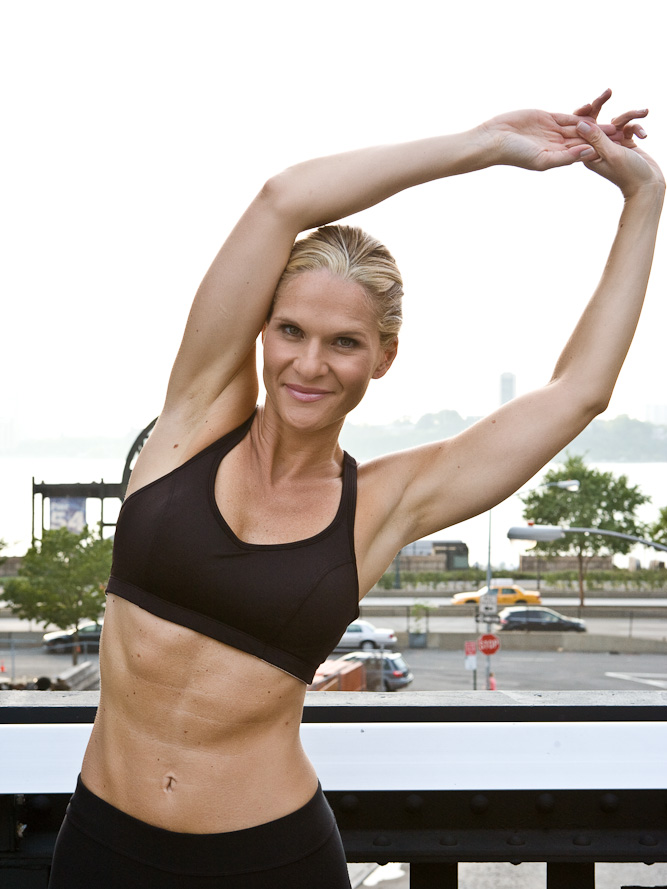
Don't Forget to Rest! Photo by Leslie Hassler
It seems like yesterday I was looking forward to wrapping up 2011 with some down time and here we are cranking away at the near mid-month mark of January 2012! For those of you who’ve kicked your fitness resolutions in the butt by pounding the pavement or hitting the gym every single day since the New Year started, let me first be the first to offer a big, congratulatory pat on the back. Now I want you to take a day off!
You might be saying, “but Laura, you’re on Twitter, you know it’s #Workout Wednesday!” I didn’t say you have to make today your off-day, but you do need a minimum of one rest day during the week.
A rest day allows the body to recover from the stress of exercise and presents an opportunity for muscular repair and recovery of the central nervous system. Pushing your body day after day at the same group exercise class or on the same weight training circuit or along the same 5-mile route is one of the quickest paths to burning out on your routine. This can be especially true for anyone who’s new to a workout routine or just coming back after a lengthy hiatus.
The possibility of a mental meltdown aside, continuously pushing the body to the limit puts you at risk for overtraining. The following are some of the symptoms to look out for to determine if you’re overdoing it:
- Fatigue
- Increased resting heart rate
- Increased resting blood pressure
- Slower recovery after exercise
- Overuse or stress-related injuries (e.g. stress fractures, tennis elbow and runner’s knee)
- Insomnia
- Irritability or moodiness
- Disinterest in sex
- Amenorrhea (when a woman stops getting her monthly period)
- Increased numbers of colds / sore throats (shows decreased immunity)
- Decreased appetite
From what I learned through my NASM and AFAA studies, a good training frequency for the fitness newbie or anyone returning after a hiatus is three resistance workouts each week. This allows you to work your muscle groups with 48 hours of recovery in between. Cardio can be done on the in-between days or even on the same day. Even more seasoned athletes should give a muscle group a 48-hour rest period before pushing it to the limit again. Another good rule of thumb is to mix up your routine with cross training. Although I’m excited to take as many Zumba® classes as possible to continue my teaching prep, I’ll be sure to spread the classes out throughout the week. The same should be applied to your favorite cardio kickbox class or your favorite at-home DVD workout.
For those of you who can’t fathom even one day without any activity, turn your run into a long, leisurely walk or substitute your favorite cardio class with an extra-long session of stretching. In fact, the good news about flexibility training is that it can be done every single day of the week!
The bottom line is to remember taking a rest day doesn’t mean you’re being lazy. Rest is an important component of any fitness routine because it gives your body the energy to have fun, be fit and feel fabulous!
Learn More About LauraLovesFitness
Many thanks to all of you who’ve taken the time to make this blogging adventure so much fun! Please check out the video below to learn a bit more about why I want to help more people have fun, be fit and feel fabulous in 2012…and beyond!
Many thanks to director/producer Larry Saperstein and the crew at C & C Studios for their help with this production and to editor extraordinaire Rob Romas for putting it together. (Check out Rob’s new business Sports Media Recruit which provides video resumes for student athletes.)
Stabilization Before Strength
 My friend Jared Morrison recently signed up for a membership at New York Sports Club. This being his first gym membership ever, we decided to turn it into a win-win situation for the both of us. Not only is Jared on his way to improving his overall health by getting on a regular workout schedule, but I am putting my NASM personal training studies into practice by helping Jared reach his goals. After meeting up with Jared for an assessment and kicking off a program, I was reminded of just how important the first phase of training is for anyone new to the gym or coming back after a hiatus.
The National Academy of Sports Medicine’s system for integrated training is called the OPT model, which stands for Optimum Performance Training. It is divided into stages and designed to help someone progress toward his or her individual goals in a safe and effective manner. The model is divided into three “building blocks:”
- Stabilization
- Strength
- Power
The bottom line is you should not focus on strength and power before you’ve tackled stabilization. Training in the stabilization phase allows you to increase muscular endurance and establish optimal communication between the nervous system and muscular system. Multiple studies have shown inefficient stabilization can cause muscles to produce force incorrectly and increase stress on the joints. This is a surefire way to put yourself at risk for injury.
Basically, the key exercises in this training phase are performed in a proprioceptively enriched environment, which is a “fancy” way of saying controlled, but unstable. These exercises challenge the body’s balance and stabilization systems. Many times, they involve taking a “traditional” exercise off a flat surface and moving you to an unstable one, like a stability ball; or standing on one leg instead of two. These exercises have an added bonus: since the body needs to work harder to stay stable, you can end up burning a lot of calories.
Here are some classic examples of stabilization exercises for resistance training. Aim to perform two sets of 12-20 reps of each:
- Total Body: Ball Squat, Curl to Press
- Chest: Ball Dumbbell Chest Press
- Back: Ball Dumbbell Row
- Shoulders: Seated Stability Ball Military Press
- Legs: Step-Up to Balance
In addition to his resistance training, Jared’s cardio routine will be working on reaching his goal of maintaining a zone one heart rate for a minimum of 30 minutes two to three times a week. (How to calculate your zone one heart rate.) He also will work on his core. Finally, as for flexibility training: he has the green light to stretch every single day – and multiple times a day if he can!
I am looking forward to monitoring and sharing Jared’s progress. In the meantime, I hope you’ve learned about some key stabilization exercises that can help your body perform at its best so you can have fun, be fit and feel fabulous!
Buy This Book!

Available at Amazon.com
When I entered the blogosphere back in July, my friend Paula Rizzo, The List Producer, gave me some good advice about how to select my topics. One tip was to write about the things that have helped me in my own fitness journey: a book, an exercise DVD or even a favorite group exercise class. So, today I want to tell you about the book that belongs on everyone’s shelf, regardless of your fitness level: Fitness or Fiction: The Truth About Diet and Exercise by Brent Brookbush, MS, PES, CES, CSCS, ACSM-H/FS.
Brent spent more than six years investigating the facts to shatter more than 60 myths surrounding diet and exercise including:
Myth #2: Carbohydrates are your enemy. What You Should Know: Excess calories are your enemy, not carbs!
Myth #24: Products that target my inner thighs, abs, and back of my arms are an important part of my exercise routine. What You Should Know: Don’t waste your time.
Myth #58: Sweating is good indicator of intensity, and is a great way to lose weight. What You Should Know: Sweat is not a reliable indicator of intensity.
or fat loss.
Each myth is debunked through extensive research – more than 600 references are cited in the book – and the facts are presented in plain English. (There are also great photographs that illustrate proper form for a wide variety of exercises.) There are no gimmicks, no fads and no empty promises. Whether you are a fitness novice or industry professional, Fitness or Fiction gives you the tools you need to build a program that will produce the results you want.

Brent Brookbush
Since 1998, Brent has educated thousands of personal trainers, written and consulted for various fitness magazines, and has been a revered personal trainer. He is also president of B2C Fitness, where he continues to develop cutting-edge training and development systems and educational publications for fitness professionals. Currently, he is an Instructor for PowerPlate, NASM, and B2C Fitness. In fact, he was my Instructor (along with Rick Richey) at the NASM Personal Fitness Workshop I took in March to help prepare for my CPT exam.
As a lifetime fitness enthusiast, novice blogger and recently NASM certified personal trainer, I know this book will become a primary reference when looking for ways to challenge myself or help others in their fitness journey. Adding Fitness or Fiction to your book collection is a surefire way to have fun, be fit and feel fabulous!
Why Water is King
 You’ve probably heard this before: you are what you eat. But here’s the thing – you are what you drink, too! The human body is two-thirds water. As the hot and hazy days of summer continue, here’s some timely information we all need to remember regardless of our fitness level.
Drinking adequate amounts of water has many benefits including:
- Regulation of body temperature
- Alleviating fluid retention
- Distribution of nutrients and oxygen to cells and organs
- Improvement of metabolic function
- Decreasing appetite
Personally, I find that last point a little hard to swallow. I do my best to drink the recommended 5-7 glasses of water each day, but I don’t know how much effect it’s had on my appetite. (Anyone who knows me knows I do love to eat!) However, will say when I’m hungry and nowhere near a healthy snack, drinking a glass of water can stave off my hunger long enough to avoid eating something I’ll regret later. (Chewing gum works for me in a pinch, too.)
Now let’s look at some of the physiologic effects of what happens when you don’t consume enough water and become dehydrated:
- Decreased blood volume
- Increased heart rate
- Increased core temperature
- Sodium retention
- Decreased sweat rate
To punctuate just how important water is to the body: the body can go for a long period of time without food, but can only survive for a few days without water.
Here are the guidelines of what we should be drinking when we exercise, according to the American College of Sports Medicine (ACSM):
- Drink 16 oz of water two hours before exercise. In warmer weather, feel free to add an additional 8 – 16 oz.
- During exercise, drink 20 to 40 oz for every hour of exercise.
- If you exercise for more than 60 minutes, you can re-hydrate with a sports drink containing up to 8% carbohydrate to replace both fluid and dwindling muscle glycogen stores.
- When exercising for 60 minutes or less, water is best. (My personal choice).
That last bullet brings me to an important point made by Brent Brookbush and Rick Richey, the amazing NASM instructors who taught the Personal Fitness Workshop I took back in March. If you have just one hour to spend in the gym or running through the park, or only time for a 45-minute spin or strength training class, why would you want to put all the calories back in your body that you’re working so hard to burn?
Now, I know there are some people out there who simply can’t stand water and need some flavor. There are plenty of zero calorie flavored water options available. In my personal opinion (which is backed by many articles I’ve read on websites ranging from WebMD to ACSM), having a flavored drink with zero calories (or 5 calories if you add one of those flavor-crystal packets to your water bottle) is better than NOT drinking anything at all.
In the end, something as simple as drinking (water!) to your health is an easy way to have fun, be fit and feel fabulous!
Beat the Heat

Photo by Laura DeAngelis
Toward the end of this wonderful weekend, I headed to our rooftop deck to enjoy my weekly “guilty pleasure” of reading the latest People magazine cover to cover. Despite my SPF 30 sunscreen, sun hat, sunglasses and big water bottle, I only lasted an hour. The heat was just too much, and I was just lying around reading. Which made me realize this is the perfect time for a refresher course on heat-related emergencies.
With a little help from the textbooks I used to study for my AFAA and NASM exams (Fitness: Theory & Practice, Fifth Edition and NASM Essentials of Personal Fitness Training, Third Edition), here’s what you need to know if you or someone you’re working out with experiences any of the following:
Heat cramps: These are painful muscle spasms, usually in the legs or abdominal region, that could be a signal that a more serious emergency is imminent.
What to do: If you experience heat cramps, stop exercising, find some shade or move indoors where it’s cool and drink cool water.
Heat exhaustion: This is a step up in severity from heat cramps, and can occur when you’ve been exercising strenuously for a long period of time in extreme heat or humidity. Signs and symptoms:
- Moist, pale, or cool skin
- Headache or dizziness
- Muscle cramps
- Heavy perspiration
- Nausea
- Weak pulse
What to do: Get out of the heat, loosen all tight clothing and cool the body with wet towels, but not to the point of shivering and drink cool water.
Heat stroke: This is the most severe heat emergency and usually happens when signs of heat exhaustion go unchecked. In this situation, dangerously high internal body temperatures will cause your body’s vital systems to fail. Signs and symptoms:
- Altered level of consciousness
- Rapid, shallow breathing
- Little or no perspiration
- Weakness
- Rapid pulse
What to do: As with heat exhaustion, get out of the heat, loosen tight clothing and cool the body with wet towels. If you can find them, you can also put ice packs under the armpits and groin area.
A few preventive steps to remember:
- Try to exercise outdoors before 9 am and after 6 pm.
- Stay hydrated! Basic guidelines call for you to drink 16 oz of water two hours before exercise, but you can drink an additional eight to 16 oz if you’re exercising in warmer weather.
- If you are being treated for cardiovascular or circulatory problems and are any medications, always check with your doctor before adding any outdoor activity to your routine.
I leave you with these two final and important tips:
- Do not hesitate to call 911 in an emergency.
- Listen to your body. It knows when something’s wrong.
While it’s the perfect time to get outside and get moving, use some extra care so you can have fun, be fit and feel fabulous!


 lauralovesfitness