Blog Archives
These Dark Times
 Welcome to the beginning of December…and the end of 2011!
I wrap up this week addressing a timely issue raised by my colleague, Joe. He wants to know how we can stay motivated to workout during these dark times. I’m not referring to the state of the economy or the political shenanigans going on in Washington. I’m literally talking about the dark days we must endure between now and the springtime.
Many of us leave our homes each morning in the dark only to leave work at the end of a long day and find ourselves enveloped in darkness once again. Add some colder temperatures to the mix, and it can become all too easy to look for any excuse to ditch your exercise plans, change into comfy clothes and make a bee line for the couch. So here are a few ways to stay on track:
- Don’t Leave Home Without the Workout Wear: If you normally exercise after work, make sure to bring a gym bag to the office. If you have to go home to change before your workout, you’ll only find yourself face-to-face with that all-too-tempting comfy couch.
- Get Physical at Lunchtime: If you usually head to a gym for a morning workout before heading to the office or after dropping the kids off for school, why not consider moving your workout to lunchtime? Even if the sun is hidden by some wintry clouds, it will be brighter in the middle of the day and sometimes that’s all you need to boost your mood and get your butt into the gym. This could also be the perfect time to see if a group exercise class you’ve been curious about is offered at midday.
- Make a Workout Date: Plan to meet a friend for that morning power walk, lunchtime step aerobics or evening Zumba class. The “guilt” factor involved with not showing up for a friend may be all you need to keep you committed to your scheduled exercise plans.
I leave you with this final tip: remembering how good you feel after a workout may provide the biggest incentive to help you stick with your routine even on the darkest days of December. Never underestimate the power of that post-exercise endorphin rush as you continue on your journey to have fun, be fit and feel fabulous!
Ice Skating Safety
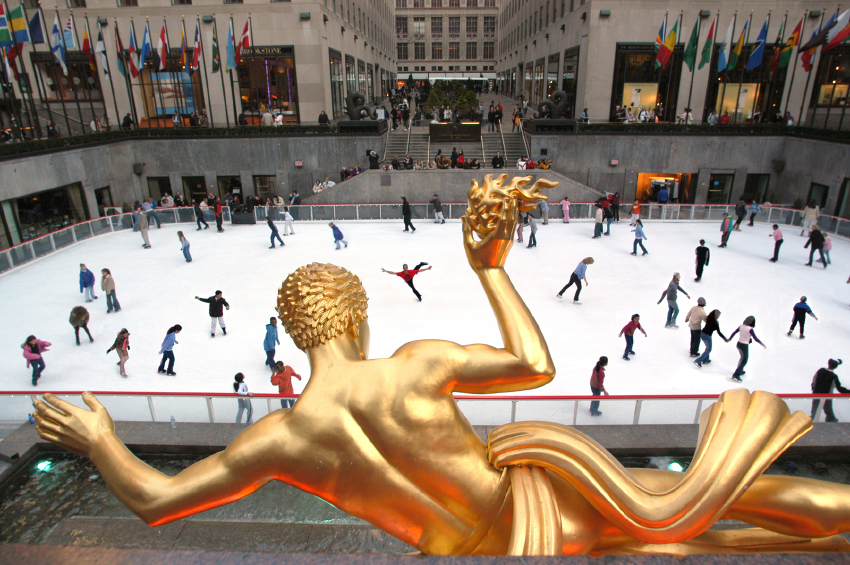 Tonight, a holiday tradition will take place here in New York City that many people consider a world-wide symbol of the season: the lighting of the Christmas Tree at Rockefeller Center. The ceremony only lasts a couple of hours, but the tree will remain a top tourist attraction and provide a brilliant backdrop to those who put their graceful skills to the test on the ice skating rink. If you’re planning to take to the ice here in the Big Apple or somewhere closer to your home, here are some timely tips for safe skating:
- Lacing up: You want your skates to be tied securely, but not so tight over the instep that you cut off circulation. If your skates feel too tight at the ball of your foot, try the next size up.
- Avoiding Foot Cramps: Many skaters, especially beginners, have a tendency to clench their toes, which can cause the foot to cramp. Try and keep your feet relaxed when you’re on the ice.
- Falling Gracefully: I hate to admit it, but despite a couple of years of ice skating lessons, I’m probably one of the least graceful people you’ll ever see on the ice. Luckily, the worst injury I ever had to recover from was a bruised ego, but obviously, it can be worse. Using your arms to catch your fall can lead to some aches and pains. Wrist injuries are common if you fall backwards and land on an outstretched arm. Hopefully, following RICE for first aid – Rest, Ice, Compression and Elevation – will take care of a minor wrist sprain within a few days. However, if you experience severe pain or swelling, get an X-ray to rule out a fracture. Also, if you’re going down and there’s a choice between hitting the ice with your face or your arm, try to at least bend your arm at the elbow to soften the blow.
- Testing the Waters: Unfortunately every year, you hear at least one horror story about someone who fell through the ice of what appeared to be a frozen pond or lake. Ice needs to be a minimum of four inches thick to be considered safe for skating in the great outdoors. If you’re not sure the ice is that thick, don’t chance it. Even at four inches, don’t skate alone as you want someone to be able to get help in the event of an emergency.
- Staying Hydrated: While many of us are good about drinking lots of water during the dog days of summer, you need to stay hydrated in the colder months, too. In fact, you can break quite the sweat skating outside thanks to being bundled up in wool scarves, hats and gloves. So make sure you drink plenty of non-alcoholic beverages, preferably water.
Click here for a tool that can help you calculate how many calories you can burn for an hour of general ice skating. As Old Man Winter comes knocking at our door, ice skating is another fun way to have fun, be fit and feel fabulous!
Holiday Decorating Hazards
 For the last six years, my parents and I have spent the weekend after Thanksgiving sharing what’s become a DeAngelis holiday tradition: Dad tinkers with the outside lights, Mom transforms the inside of my childhood home into a winter wonderland and I play the “elf” who transports the decorating supplies from the attic to the ground floor to help make it happen. Sure it’s a lot of work, but with some good tunes playing (which may include anything from Abba to the “Goodfellas” soundtrack) the day flies by and before we know it, we’re in the true holiday spirit!
As I climbed up to the attic for the first of at least a dozen trips this weekend, I remembered this festive time can also be hazardous if you don’t use some caution. You probably already know it’s not a good idea to jump on an elliptical machine for high interval training following a six-month period of zero exercise. You may have also read a previous post where I described the importance of working on stabilization before strength. While I hope decorating your home for the holidays isn’t as strenuous as your bi-weekly strength training class, I do want to remind you of a few key movements that deserve some extra attention:
- Lifting: I must have mentally told myself several dozen times during the weekend to not bend over at the waist and pick up that heavy box. Instead, I did my best to turn every box lift into an opportunity to perform the perfect squat. Whether you think you have a “strong” back or not, these are good tips to keep in mind to help prevent back injuries.
- Repetitive movements: Stringing lights along the outside of the house or tossing tinsel on the tree are a couple of decorating duties that require you to work with your arms overhead for long periods of time. This presents a situation where the latissimus dorsi (the broadest muscle of the back) can become overactive and tight, which can ultimately lead to shoulder soreness. So, it’s not a bad idea to do a couple of lat stretches before (and after) you get started on any type of arms-overhead activity.
- Ladder safety: While Clark W. Griswald makes ladder disasters look hilarious in “Christmas Vacation,” (my all-time favorite holiday comedy) in reality, ladder accidents are no laughing matter. Click here for a checklist on proper ladder usage.
If you can pop in a workout DVD, take a walk or hit the gym before the decorating begins, extra kudos to you for burning yet a few more calories during this hectic season! (Just remember not to void all your hard work by having a cookie for each ornament you put up on the tree.) In the end, following a few safety tips and using some good ol’ common sense can help you have fun, be fit and feel fabulous right through the holidays!
The Aftermath
If you have a turkey hangover, don’t worry, you’re not alone! I hope you had a wonderful holiday filled with good food, quality time with family and friends and a win by your favorite football team. So now what? Get moving!
- Shop Til You Drop: Dealing with the crowds on Black Friday has never been my thing. (Back in my TV-news-reporter days, I remember being shocked by the number of people who did show up at the local superstore at 3 or 4 am to get a jump on the deals.) If you do plan on hitting the mall today, wear your sneakers, pack some healthy snacks and use the hustle and bustle of the crowds as the perfect motivation to keep walking from store to store!
- Trot Off The Turkey: Many communities have walks and runs scheduled for the weekend after Thanksgiving. Check your local paper for any events that welcome last-minute participants. Grab some friends so you can share your holiday stories.
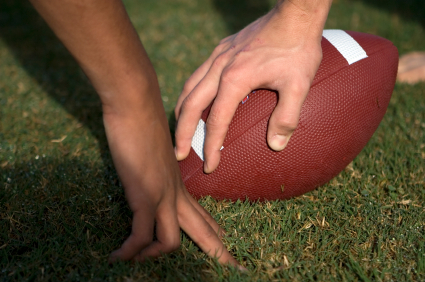
- Toss Some Pigskin: Touch football anyone? It’s supposed to be a pretty mild weekend here in New York, so it’ll be a great time to get a spontaneous game going at a local park or in someone’s backyard. Then you can share whatever leftovers still linger from Thanksgiving. That means you won’t eat them all by yourself!
- Put a Healthy Twist on Leftovers: Instead of a turkey sandwich, why not chop up apples, grapes and celery and mix them with the turkey for a salad with zing? Or you can dice the turkey, and simmer it in broth with brown rice and celery for a savory soup.
My final tip: keep moving! As I mentioned earlier this week, the added obligations of the holiday season might just make exercise even more important than ever. So, be good to yourself by planning time for some activity so you can have fun, be fit and feel fabulous – right through the end of the year!
Talking Turkey
 Well, here we are. It’s Thanksgiving Eve. Many of us are counting the minutes til the office closes and the kids get out of school so the long weekend can officially begin. If you have any last-minute prepping to do, take a deep breath and remember, somehow it’ll all get done. Don’t forget to do something good for yourself today. If you can’t get through your normal workout routine or make it to your favorite Wednesday spin class, try taking a walk to at least get your blood moving and clear your head.
Now let’s talk about the big feast day. I’ve always loved Thanksgiving. There are no gifts to buy and you can just enjoy quality time with family and friends. Of course, that quality time tends to be filled (or should I say stuffed?) with food, drink and football. Here are some tips to help you avoid overdoing it – at least when it comes to the food and drink:
- Get in some morning activity: Pop in an exercise DVD or pound the pavement in your neighborhood. If your gym is open, try an early morning group exercise class.
- Don’t skip breakfast: Eat something sensible to get your metabolism moving and to avoid being ravenous when you dig into that holiday meal. If your Thanksgiving feast isn’t scheduled until late afternoon, make sure to follow breakfast with a small lunch or sensible snack so you don’t go overboard later. Try adding a serving of almonds or high-fiber cereal (I love Newman’s Own Sweet Enough Honey Flax flakes) to a non-fat plain Greek yogurt with some fruit. Another satisfying breakfast or snack option: plain oatmeal with the non-fat Greek yogurt mixed in.
- Use a smaller plate (like a salad dish) for your meal: If there’s salad or veggies, load up on those first, then grab some turkey. Use the remaining space for the potatoes, stuffing and other starches. (There won’t be as much room left as you’d have on a regular dinner plate.)
- Eat slowly and enjoy: If you clean your plate, wait about 10 minutes before going back for round two. This will help you decide if you’re really hungry. If you aren’t, you’ll feel good knowing you had one helping – before moving on to dessert, of course!
- Watch the alcohol intake: This is a good day to follow the every-other-drink-is-alcohol plan. Enjoy a glass of wine, beer or cocktail then have a glass of water of diet soda before moving on to the next libation.
- Give away leftovers: If you’re hosting the holiday feast, don’t be shy about giving some of the uneaten turkey and trimmings to your guests.
I wish all of you a very Happy Thanksgiving and leave you with this final thought: whatever you do end up eating today, tomorrow is a whole new day to have fun, be fit and feel fabulous!
Staying Fit Through The Holiday Season
 It’s that time again. Time to think about all the turkey, trimmings, pies, cookies and cocktail parties that start at Thanksgiving and run right through New Year’s. While this is supposed to be a season filled with joy and wonder, let’s not kid ourselves. It’s also a time filled with stress, as we figure out how to get all the shopping, decorating and other holiday prep done on top of work, taking care of the kids and our other daily obligations. But that doesn’t mean you should put the sneakers and workout wear away until 2012. In fact, the extra stress and calories thrown at us at this time of year should make finding time to exercise more important than ever. It could be just what your mind and body need to actually enjoy some holiday cheer!
It may feel like there are fewer hours in the day with everything that needs to get done. If you normally spend more than an hour at the gym or take 90-minute power walks with your friends in the neighborhood, chances are you’re going to need to spend some of those minutes elsewhere. So, here are some tips on how to fit fitness into your busy holiday schedule:
- Switch things up: Try working out in the morning. Trust me, I know this isn’t easy. I’m a post-work workout gal myself. However, at this time of year, if you can hit the gym, take a walk or pop in your Zumba DVD first thing in the morning, you’ll have gotten your exercise routine out of the way and you won’t feel so guilty about going to that holiday get together later that night.
- Try group exercise classes: Most classes run approximately 60 minutes and can take the guesswork out of planning your own routine. Give total body conditioning or strength training classes a shot as they get your heart rate up and hit all the major muscle groups in a 60-minute window. The group environment also gives you the opportunity to strike up a conversation with someone else who may have his or her own survival tips for the holiday season!
- Make shopping physical: If you drive to a mall, don’t look for the closest parking spot to the entrance. Also, be sure to change out of the heels or dress shoes into sneakers to help your body walk in good form while you’re rushing around.
- Arm yourself with healthy snacks: If you’re running from work to shop, chances are you’ll be hungry. So instead of letting the smell of cinnamon, chocolate or some other temptation get the best of you, have some almonds or a high-fiber snack bar in your bag.
- Don’t arrive hungry: Just like it’s a bad idea to go to happy hour on an empty stomach, don’t show up for Thanksgiving dinner or a holiday party feeling ravenous. If you’re eating late in the day, have portion-controlled healthy meals leading up to the “big” meal and a snack up to an hour before arriving at the feast. This will prevent you from grabbing the first high-calorie, high-fat item you see.
Be sure to check back on Wednesday when I’ll have some more eating tips to help you stay on track during this season so you can continue on your path to have fun, be fit and feel fabulous!
The Perfect Occasion to Celebrate You!
Happy Friday, everyone!
 I’m especially looking forward to the weekend ahead as my fabulous friend, Ania, is coming to town to celebrate her birthday in New York City! Ania and I have known each other since the first day of first grade, so we’ve been fortunate to celebrate many birthdays and other fun life events together. Of course, we’ve helped each other through the not-so-great times, too, which is what being a friend is all about.
I figured this was the perfect time to write about how your birthday really is the one day on the calendar when you should celebrate you! It’s a time to think of all the things you’ve accomplished, while also setting goals for the year ahead. I can’t think of a better time to really assess your fitness goals and figure out what you want to do to feel better than you do today. Maybe this is the year you’ll take up one of your favorite “childhood” sports, like tennis. Maybe you’ve always wanted to train for a marathon or get a mountain bike for rides on the weekends. Perhaps it’s time to start having a healthier relationship with fruit, veggies and whole grains. Or maybe it’s just time to treat yourself to a good pair of sneakers and cute yoga pants for group exercise classes or walks around the neighborhood.
Of course, your birthday should be filled with more than just “serious” contemplation. It’s the perfect excuse to go out and have some fun! Party plans with Ania include tapas and sangria followed by dancing, which to me is one of the best ways to burn a few calories after some celebratory splurging! (Considering Ania and I have been known to dance nonstop for two or more hours at a time, we’ll be sure to burn off at least one glass of sangria!)
Whether you’re looking ahead to a new year or simply reveling in the celebratory moment, make your birthday your time to take control and decide what you want to do to have fun, feel fit and be fabulous!
Blame It on the Potato Skins
I had planned to come home after work and write another post about some sort of foam roller or core exercise, but the potato skins got in the way.

With Deanna Earlier This Year on the High Line
Work has been a bit overwhelming lately. Lots of deadlines, lots of demands. After a busy morning at the office, I was at a studio filming the December edition of “Health & Home Report.” When we wrapped filming the show, my boss let me shoot a couple of fitness-related videos for future shows. (Be on the lookout for those in early 2012!) Afterward, my makeup artist and dear friend, Deanna, decided to catch up over a glass of wine before heading home. That one glass turned into two and we both noticed they had loaded potato skins on the menu. Neither of us had indulged in either – a second glass or loaded skins – in quite awhile. Ultimately, Deanna and I decided both went extremely well with some quality conversation and laughter among friends.
So I find myself once again writing about familiar territory. You simply can’t plan everything all the time. You make a plan to go to the gym after work, but then you get a call from that friend you haven’t seen in months who is unexpectedly in town thanks to a business meeting. There’s no reason to feel “guilty” about blowing off your cardio kickbox class to get together with that friend.
For the same reason, I refuse to feel guilty about the loaded skins I shared with Deanna. I know tomorrow, I’ll “start over” with my healthy breakfast parfait featuring non-fat Greek yogurt, berries and “Newman’s Own Honey Flax flakes.” It will be a new day, filled with new opportunities to make health-conscious choices. To that end, I’ve already packed my sneakers and workout wear so I have no excuse for not attending the Zumba demo at the New York Sports Club two blocks from my office.
I’ve said it before and I’ll say it again: the best laid plans can sometimes go awry, but not always for the wrong reasons. While an unexpected get together with family or friends may throw off your normal “routine,” it can open the door to laughter and good conversation. These are two crucial components in our everyday quest to have fun, be fit and feel fabulous!
The Little Things Mean A Lot
You’ve probably heard this a few times in your life: the little things mean a lot. The familiar expression can easily be applied to fitness. Whether it’s taking the stairs instead of an elevator or parking the car a bit farther away from the entrance to the grocery store, the little things can add up and have a great cumulative effect.

Photo by Leslie Hassler
There is one important aspect of training that can benefit from two small technical maneuvers. I’ve already written about the importance of core training, and can promise it’s a topic that deserves re-visiting many times in the future. The core is the center of gravity for the body and the origin of all movement. Comprised of the lumbo-pelvic-hip complex and the thoracic and cervical spine, if the core is unstable or weak, the entire kinetic chain will be thrown off thanks to muscle imbalances. That’s when compensations occur and ultimately, you end up being a prime candidate for injury.
In order to train the core effectively, you want to first focus on the muscles needed for stabilization. (The six core muscles that fall into the stabilization category are: the Transversus Abdominus, Internal Oblique, Lumbar Multifidus, Pelvic Floor Muscles, Diaphragm and Transversospinalis.) There have been several studies indicating people who do not focus on stabilization of the core before working on strengthening the muscles in the core’s movement category (e.g. Rectus Abdominus, External Obliques, Erector Spinae) can suffer from lower back pain. The research shows this happens because of unwanted motion of the individual vertebrae.
The good news is there are two simple practices that can help you stabilize your pelvis properly before performing any core exercises:
- The “drawing-in maneuver:” Whether it’s a supine march, floor bridge, ball crunch or cable rotation, before you do anything, you want to pull your belly button in toward the spine. (Go ahead – give it a try right now!)
- Keep your neck in a neutral position: I usually tell people to try to imagine having an orange in between their head and neck so that you will look straight up at the ceiling when performing core exercises, like crunches. If you let your chin jut out, you can put extra stress on the cervical spine.
Don’t underestimate the impact a couple of simple steps can make on your core training. Like so many other parts of life, it’s the little things you do in your exercise routine that can help you have fun, be fit and feel fabulous!
My Aching Calves – Part Two
 So glad you came back for more information on how to stretch your way to relief of those tight, sore calf muscles!
I start by coming clean about what I call my “love-hate relationship” with the foam roller. My friend and former personal trainer, Rich, introduced me to the foam roller years ago, but I have to admit I stopped using it for quite some time. Now, I truly wish I stuck with it.
Just how does the foam roller fit in to flexibility training? It is an integral tool used in a stretching technique called self-myofascial release, often shortened to SMR. The idea is that by applying pressure to a muscle adhesion, commonly referred to as a “knot,” you initiate a process called autogenic inhibition. My NASM textbook defines autogenic inhibition as:”the process when neural impulses sensing tension are greater than the impulses causing muscle contraction. Stimulation of the Golgi tendon organ overrides the muscle spindle.” In simple terms, you use the foam roller to apply pressure to the most tender spot in your tight calf muscles and you will eventually feel the knot “release” itself.
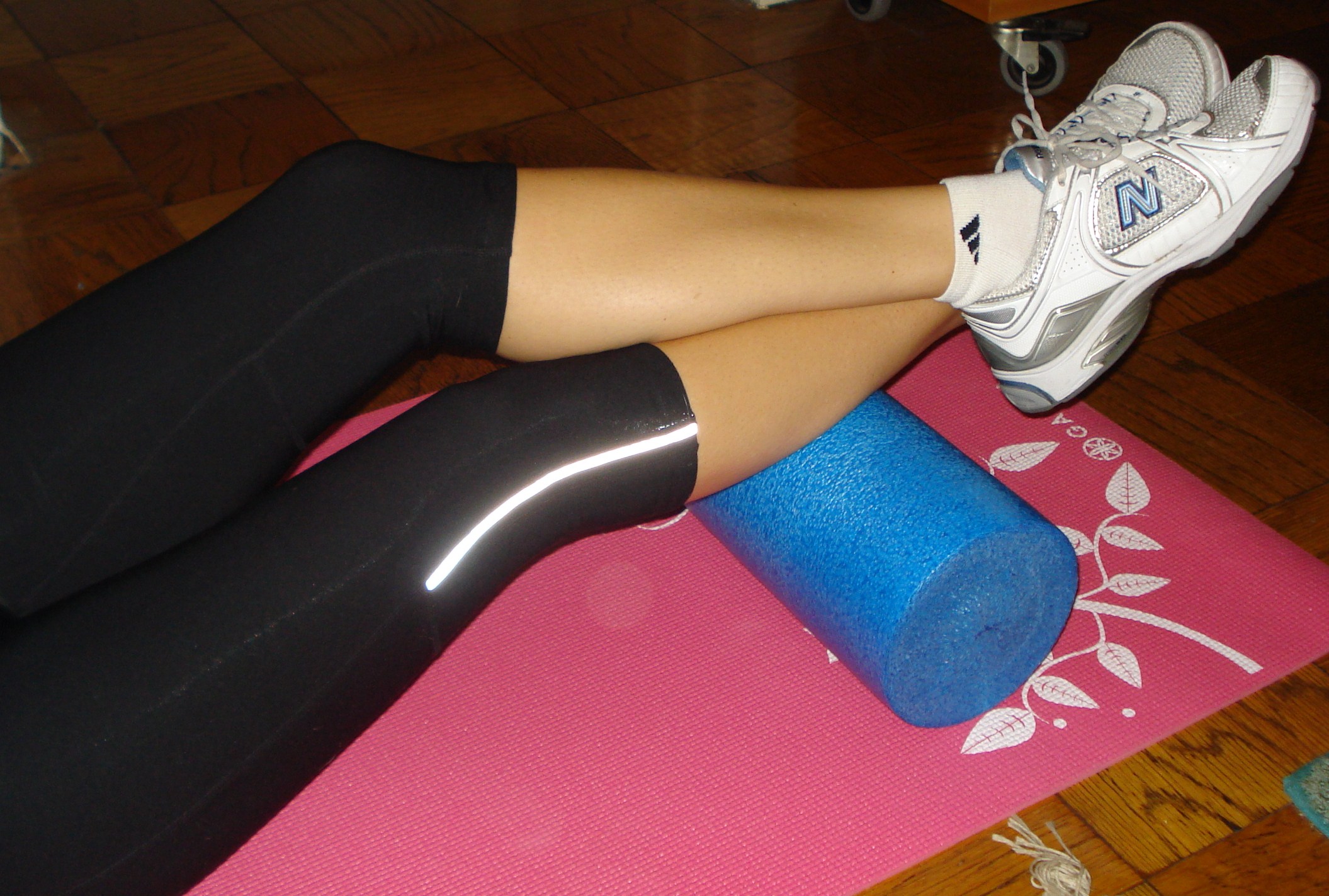 Here’s how to effectively use the foam roller on the calves:
- Sit on the floor, and put the foam roller under the mid-calf of your right leg. You can cross your left leg over the right to increase the pressure. (This is optional)
- Roll back and forth ONLY until you find the most tender spot on the calf and then HOLD there for a minimum of 20-30 seconds. You need to hold on this spot to allow time for autogenic inhibition to kick in. Keep breathing in and out and before you know it, you will actually feel the muscle release. (This may take up to two minutes.)
- Repeat the same process for the left leg.


 lauralovesfitness